


It’s not just about manufacturing. Supply chains, logistics, local partners, and access to the US market are changing how Japanese companies see Mexico.
For decades, when Japanese companies expanded overseas, Asia was the default choice — both for production and for sales.
That is changing. Supply chain disruptions, geopolitical shifts, and the need for reliable access to the US market are leading more Japanese companies to consider Mexico. This is what many now call nearshoring to Mexico.
The numbers support it: in 2025, Mexico was the United States’ largest trading partner as a single country.
But Mexico is much more than a low-cost place to make things. With a border of roughly 3,000 km with the US, it can serve as a base for manufacturing, logistics, sourcing, and sales across North America.
So why are Japanese companies paying attention now?
1. A location built for North American access
One of the biggest reasons is simple: Mexico is next door to the United States.
For Japanese companies whose main market is the US, deciding where to produce and where to supply from is not only a cost question. It affects logistics, lead times, and the stability of the whole supply chain.
Sharing a border with the US makes Mexico a strong candidate for production and distribution aimed at North America. Increasingly, companies need to design their supply chain for North America as a whole — not just for the US.
2. From “a place to produce” to “a place to do business”
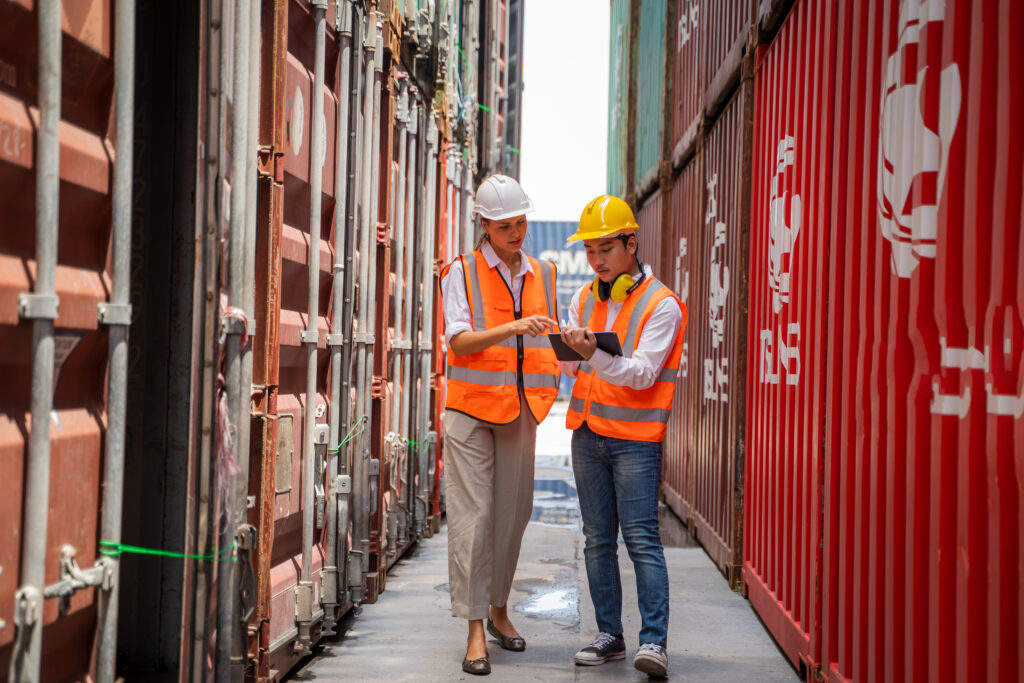
Mexico’s value goes beyond manufacturing.
In manufacturing, sourcing, production, warehousing, logistics, and sales all work as one supply chain. When considering Mexico, it helps to ask which of these roles your company actually needs:
- Production base
- Logistics hub
- Sourcing base
- Sales base
- Partnerships with local companies
The question is not only “What should we make in Mexico?” but “How should Mexico fit into our business?”
3. Nearshoring to Mexico as a supply chain option
Supply chain resilience is now a board-level issue. Concentrating production or sourcing in one country or region leaves a company exposed to logistics disruptions, trade policy changes, and geopolitical risk.
That is why more companies are spreading production and sourcing across multiple regions. Nearshoring to Mexico is one of the strongest options for doing this.
At the same time, the North American trade environment is evolving. At the July 2026 joint review of the USMCA (United States–Mexico–Canada Agreement), the US did not agree to extend the agreement. USMCA remains in force, but it will now be reviewed every year.
Mexico is not the right fit for every company. The best approach is to compare several options — including Mexico — based on your products, customers, markets, logistics, sourcing, investment size, and the direction of trade rules.
4. Local partners make the difference
Gathering information is not enough. Even finding a factory or warehouse can require working with experts in real estate, logistics, manufacturing, talent, and legal matters.
Japanese and Mexican companies also differ in more than language: business customs and decision-making styles can be quite different. Understanding the local business environment and communicating smoothly with trusted partners often decides whether an expansion succeeds.
At Nearshoring.jp, we work with local partners in Jalisco — one of Mexico’s key manufacturing regions — and beyond, to connect Japanese companies with the right people on the ground.
5. Marketing with North America in mind
A base in Mexico does not mean your customers are only in Mexico. If North America is the goal, you need to connect your Mexican operations with marketing to the US and other markets.
That takes more than translation. It takes communication built for each market — websites, content, social media, and SEO — and a clear plan for how to explain the value of your company and products to local customers and partners.
6. What to clarify before deciding on Mexico
You don’t need to decide to “enter Mexico” on day one. Start by finding out whether Mexico is the right market and location for you. Key questions include:
- Is there a market opportunity for our products or services?
- Which region should we be based in?
- Who are the local competitors?
- Can we build the logistics and supply chain we need?
- What kind of local partners do we need?
- How does Mexico connect to our North American strategy as a whole?
The more concretely you understand the market at the research stage, the better your later decisions will be.
Seeing Mexico as a gateway to North America
“Labor is cheaper” or “It’s close to the US” is not enough of a reason on its own. What matters is the role Mexico can play in your company’s global strategy:
- A production base?
- One part of a wider supply chain?
- A logistics and business hub for North America?
- A way to find new opportunities through local partnerships?
The answer is different for every company. That is exactly why good local information — measured against your own business goals — matters so much.
How Nearshoring.jp can help
Nearshoring.jp shares insights on nearshoring in Mexico and overseas expansion, in both Japanese, English and Spanish.
From market research to communication with local partners, international marketing, localization, and content creation, we support each company based on its specific goals.
Is Mexico the right option for your company? We’re happy to help you take the first step in finding out.
→ Contact us: https://nearshoring.jp/en/contact/